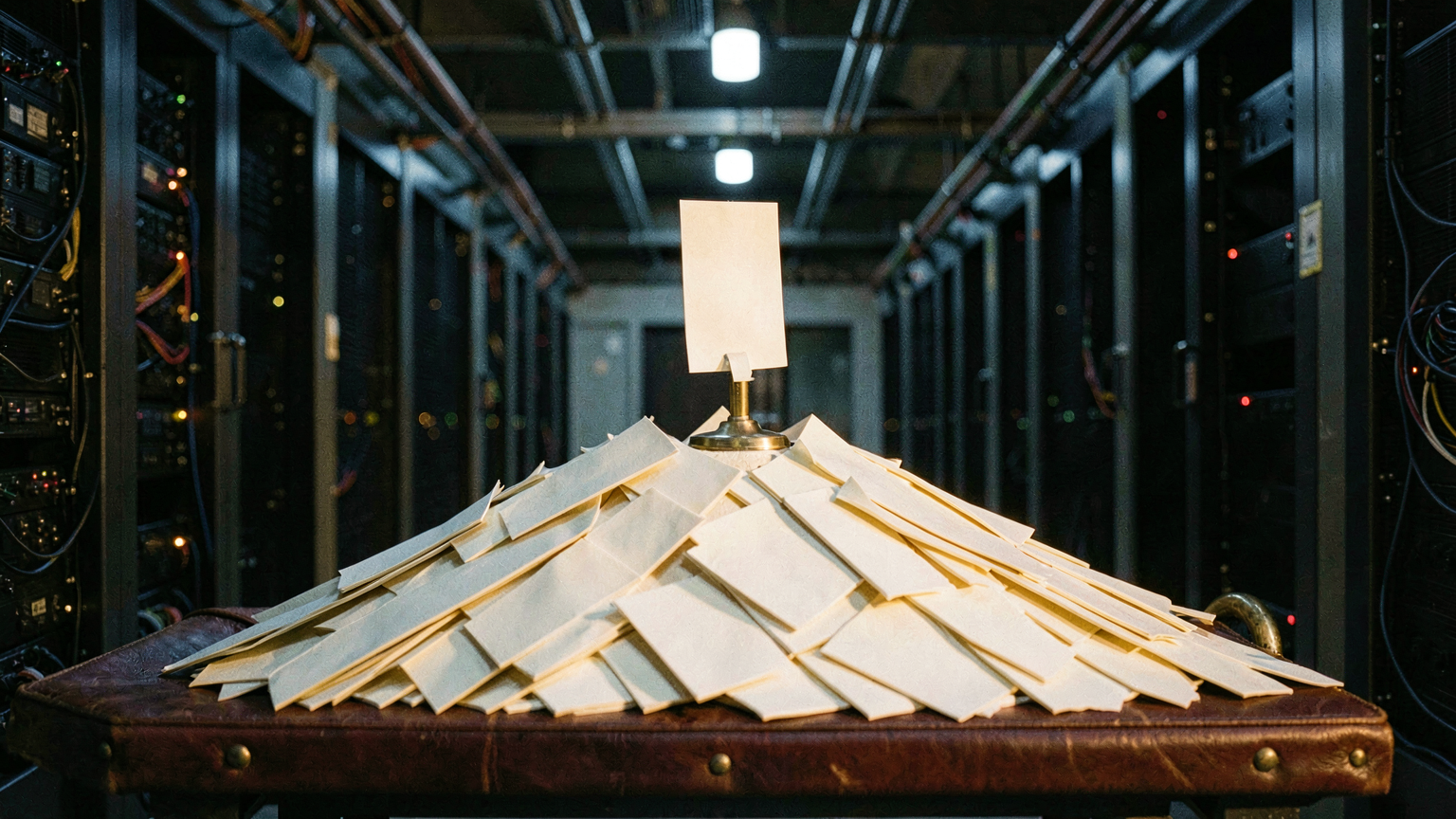
The agent had no memory of competence. It knew nothing about what had worked a hundred times before, only what the model currently predicted given the prompt in front of it. Every dispatch was the first dispatch. I was paying the planner tax over and over for a decision that never changed.
The obvious fix, an embedding-similarity cache, demos beautifully and falls apart in production, because similarity is not identity. "Summarize the Q3 earnings" and "summarize this PDF about pricing" sit close together in vector space and are not the same task.
The answer turned out to be 39 years old. SOAR, the 1987 cognitive architecture, compiles a rule the moment a problem resolves successfully: given this exact context, fire this directly and skip the deliberation. Recall replaces reasoning. It builds the cache only from confirmed success, and it matches on structure, not on a fuzzy distance.
The agents we build re-deliberate settled decisions because we never gave them a way to remember being right. That is the whole bug. Give them a structural memory of what worked, and the planner comes off the critical path for every decision you have already made a dozen times.
Full writeup: Agent Routing Caches from SOAR Chunking